A Model of Individual Differences in Learning Air Traffic Control
Niels Taatgen
|
In order to faithfully model human actions, learning and skill acquisition
must be understood and implemented in a working model. The
ACT-R architecture
provides a good framework for such models.
Individual differences in skill acquisition are influenced by several
architectural factors. According to Ackerman's theory, general
intelligence, speed of proceduralization and psychomotor speed influence
different stages of skill acquisition. Ackerman tested this theory by
correlating performance on an Air Traffic Controller (ATC) task with
tests on specific abilities. The present study discusses an ACT-R model
of the ATC task in which the relevant abilities can be manipulated
directly, providing additional support for the theory.
Keywords: Skill acquisition, Cognitive modeling, Air Traffic Control, Individual differences |
Slides
|
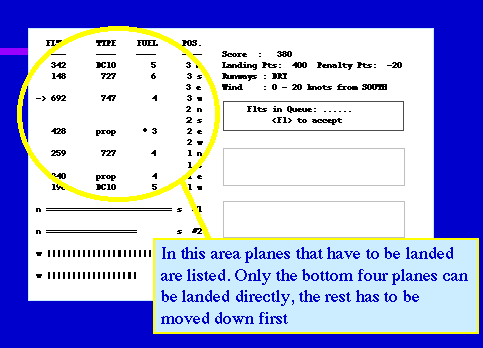
| A screen dump showing the essential information to be processed in an air-traffic control (ATC) task |
|
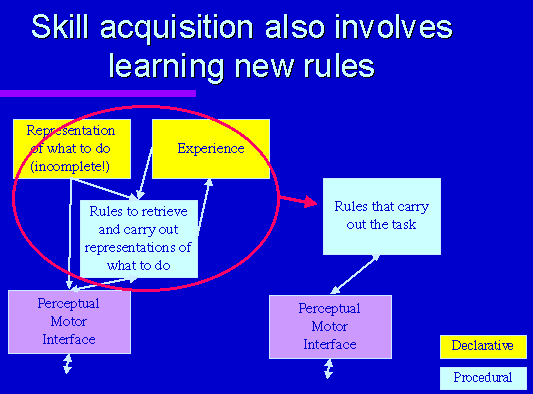
| Skill acquisition as a chunking process which diminishes the need for declarative knowledge as learning proceeds |
Lezing, te presenteren op het symposium 'Echt of Namaak: simulatie en modellering in beweging', 5 oktober 2001, Rijksuniversiteit Groningen.